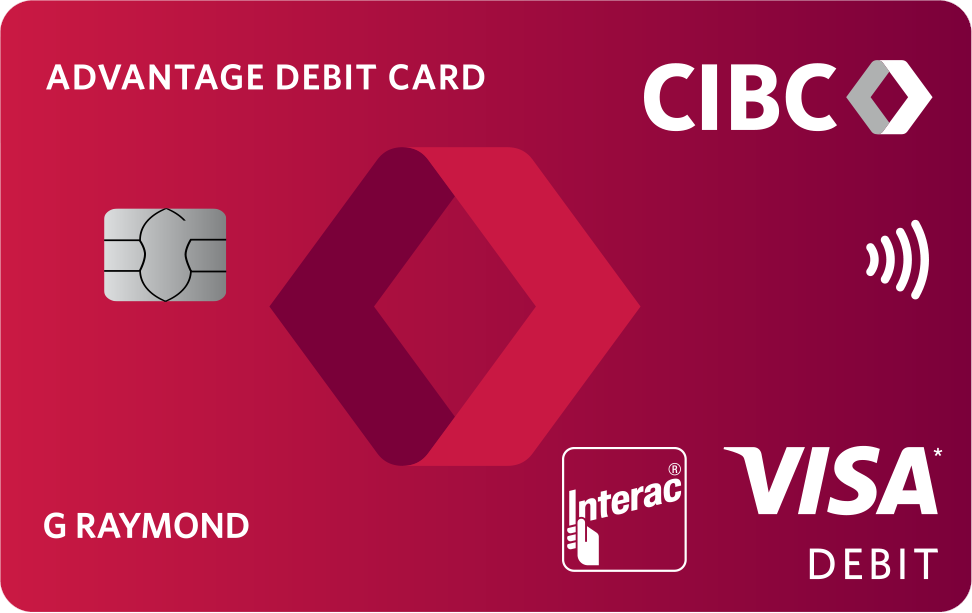
† Cash reward offer begins on November 20, 2025, at 12:01 am ET. Offer available to residents of Canada and international students who meet the eligibility requirements for the CIBC Smart Start or CIBC Smart for Students benefit and, from 2022 to the time of opening the account, are not holders or joint holders of a CIBC chequing account, all as determined by CIBC in its sole discretion. To qualify for this offer, open a CIBC Smart™ Account with Smart Start or Smart for Students benefits. Within 2 months after the month of opening the account, earn a $125 cash reward when you complete 5 eligible Visa* Debit purchases within the same calendar month. Eligibility of transactions will be determined by CIBC in its sole discretion. This offer can be combined with the CIBC Refer-a-Friend Program. Offer cannot be combined with any other chequing account offer, reward or rebate unless otherwise indicated by CIBC. The cash reward will be deposited into your account within 7 months after the month that you have opened the account. Other conditions apply. Review the review the terms and conditions (PDF, 135 KB) Opens a new window..
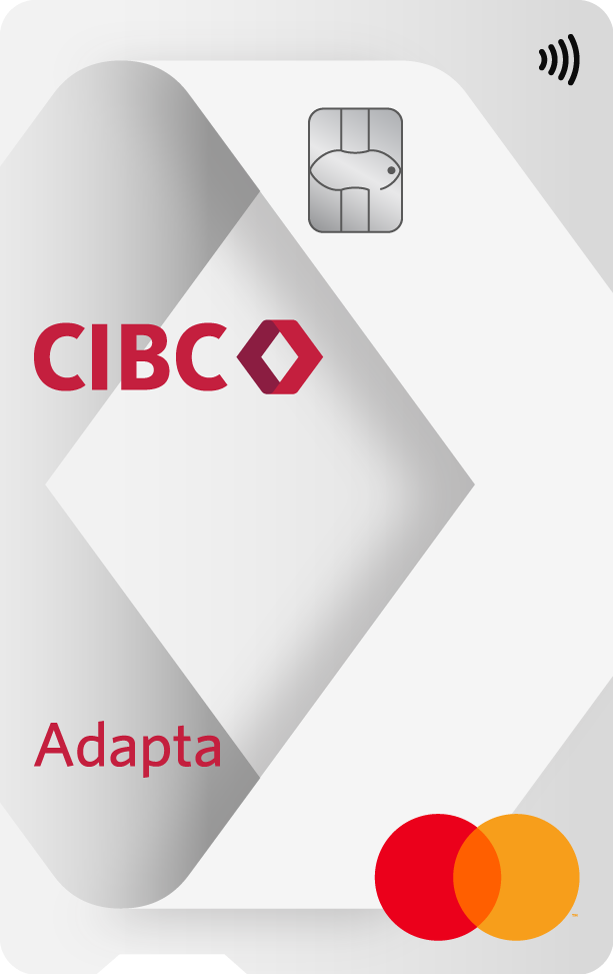
You can qualify for this offer if you apply and are approved for a new CIBC Adapta™ Mastercard® for Students beginning April 7, 2026.
If you apply and are approved for a new eligible card, you can receive:
i. A welcome bonus of 3,000 Adapta points when you make your first purchase within the first 4 monthly statement periods.
ii. An additional bonus of 9,000 Adapta points if you have at least $1,000 in net purchases posted to your account during the first 4 monthly statement periods.
The up to $150 in value is based on the combined total value for 12,000 Adapta Points redeemed towards select CIBC financial products ($100 value) and Roadside Assistance ($50 value). If you choose to redeem 12,000 Adapta Points as payment to your outstanding credit card balance, the total value of the redemption will be $80.
Offer applies to newly approved card accounts only; transfers from an existing CIBC credit card to a CIBC Adapta™ Mastercard® for Students are excluded. Card account must be open and in good standing at the time the bonus Adapta Points are awarded. Adapta Points are awarded to you within 8 weeks after all qualifying purchase(s) are posted to your Credit Card Account, less all returns and credits. For this offer, the following do not qualify as purchases: Cash advances, CIBC Global Money Transfers™, optional credit card insurance premiums, fees, interest, balance transfers, payments, CIBC Convenience Cheques, adjustments or Adapta Points redemptions. It may take up to several business days for purchases to be posted to your account. This offer is not transferable. This offer may be withdrawn or changed without prior notice at any time. CIBC may approve your application, but you are not eligible to receive this Offer if you have opened, transferred or cancelled another Adapta™ card within the last 12 months. This offer may be revoked if you appear to be manipulating or abusing it, or are engaged in any suspicious or fraudulent activity, as determined by CIBC in its sole discretion.
The CIBC Best Student Life Bundle cash reward offer begins on November 20, 2025 at 12:01 a.m. ET (“Offer Start Date”). Offer is available to residents of Canada and international students who: (i) have reached the age of majority in their province or territory of residence, and (ii) do not currently hold a CIBC credit card, CIBC chequing account or CIBC savings account. To qualify for the cash reward, on or after the Offer Start Date, you must apply online Opens a new window. or in a Banking Center for the CIBC Best Student Life Bundle and open your first: CIBC eAdvantage Savings Account, CIBC Smart account with either the Smart Start or Smart for Student benefit, and CIBC student credit card. A valid e-mail address must be provided as part of the application. You must: (i) by the end of the second full calendar month after the month the last product in the bundle is opened (the “Qualifying Month”), have a closing balance of least $100 in each of your CIBC Smart account and your CIBC eAdvantage Savings account, and then (ii) maintain a month-end closing balance above $0 for the next two calendar months following the Qualifying Month. Closing balances will be determined based on transactions that have been posted to your account on or before the end of the calendar month. In most cases, transactions completed after 6:00 pm ET or on weekends and holidays will be posted on the next business day. If all offer requirements are met, the $50 cash reward will be credited to your CIBC Smart account directly within two (2) months after the month you completed all offer requirements. All deposit and credit card products must remain open, unconverted, and in good standing at the time the reward is deposited. CIBC reserves the right to end, cancel, change or suspend this offer or change these terms at any time without notice. Offer can be combined with: CIBC Student Refer-a-Friend, CIBC Smart Start & Smart for Student cash reward offers, CIBC eAdvantage Savings Account special interest rate offers, and CIBC credit card cash, Adapta points, Aventura points, or Aeroplan points welcome offers. This offer cannot be combined with any other offer, reward, or rebate unless otherwise indicated by CIBC.
‡ Cash reward offer begins on November 20, 2025, at 12:01 am ET. Offer available to residents of Canada and international students who meet the eligibility requirements for the CIBC Smart Start or CIBC Smart for Students benefit and, from 2022 to the time of opening the account, are not holders or joint holders of a CIBC chequing account, all as determined by CIBC in its sole discretion. To qualify for this offer, open a CIBC Smart™ Account with Smart Start or Smart for Students benefits. Within 2 months after the month of opening the account, earn a $125 cash reward when you complete 5 eligible Visa* Debit purchases within the same calendar month. Eligibility of transactions will be determined by CIBC in its sole discretion. This offer can be combined with the CIBC Refer-a-Friend Program. Offer cannot be combined with any other chequing account offer, reward or rebate unless otherwise indicated by CIBC. The cash reward will be deposited into your account within 7 months after the month that you have opened the account. Other conditions apply. Review the review the terms and conditions (PDF, 135 KB) Opens a new window..
◇ You can qualify for this offer if you apply and are approved for a new CIBC Adapta™ Mastercard® for Students beginning December 10, 2025.
If you apply and are approved for a new eligible card, you can receive:
i. A welcome bonus of 3,000 Adapta points when you make your first purchase within the first 4 monthly statement periods.
ii. An additional bonus of 9,000 Adapta points if you have at least $1,000 in net purchases posted to your account during the first 4 monthly statement periods.
The up to $150 in value is based on the combined total value for 12,000 Adapta Points redeemed towards select CIBC financial products ($100 value) and Roadside Assistance ($50 value). If you choose to redeem 12,000 Adapta Points as payment to your outstanding credit card balance, the total value of the redemption will be $80.
Offer applies to newly approved card accounts only; transfers from an existing CIBC credit card to a CIBC Adapta™ Mastercard® for Students are excluded. Card account must be open and in good standing at the time the bonus Adapta Points are awarded. Adapta Points are awarded to you within 8 weeks after all qualifying purchase(s) are posted to your Credit Card Account, less all returns and credits. For this offer, the following do not qualify as purchases: Cash advances, CIBC Global Money Transfers™, optional credit card insurance premiums, fees, interest, balance transfers, payments, CIBC Convenience Cheques, adjustments or Adapta Points redemptions. It may take up to several business days for purchases to be posted to your account. This offer is not transferable. This offer may be withdrawn or changed without prior notice at any time. CIBC may approve your application, but you are not eligible to receive this Offer if you have opened, transferred or cancelled another Adapta™ card within the last 12 months. This offer may be revoked if you appear to be manipulating or abusing it, or are engaged in any suspicious or fraudulent activity, as determined by CIBC in its sole discretion.
†† The CIBC Best Student Life Bundle cash reward offer begins on November 20, 2025 at 12:01 a.m. ET (“Offer Start Date”). Offer is available to residents of Canada and international students who: (i) have reached the age of majority in their province or territory of residence, and (ii) do not currently hold a CIBC credit card, CIBC chequing account or CIBC savings account. To qualify for the cash reward, on or after the Offer Start Date, you must apply online Opens a new window. or in a Banking Center for the CIBC Best Student Life Bundle and open your first: CIBC eAdvantage Savings Account, CIBC Smart account with either the Smart Start or Smart for Student benefit, and CIBC student credit card. A valid e-mail address must be provided as part of the application. You must: (i) by the end of the second full calendar month after the month the last product in the bundle is opened (the “Qualifying Month”), have a closing balance of least $100 in each of your CIBC Smart account and your CIBC eAdvantage Savings account, and then (ii) maintain a month-end closing balance above $0 for the next two calendar months following the Qualifying Month. Closing balances will be determined based on transactions that have been posted to your account on or before the end of the calendar month. In most cases, transactions completed after 6:00 pm ET or on weekends and holidays will be posted on the next business day. If all offer requirements are met, the $50 cash reward will be credited to your CIBC Smart account directly within two (2) months after the month you completed all offer requirements. All deposit and credit card products must remain open, unconverted, and in good standing at the time the reward is deposited. CIBC reserves the right to end, cancel, change or suspend this offer or change these terms at any time without notice. Offer can be combined with: CIBC Student Refer-a-Friend, CIBC Smart Start & Smart for Student cash reward offers, CIBC eAdvantage Savings Account special interest rate offers, and CIBC credit card cash, Adapta points, Aventura points, or Aeroplan points welcome offers. This offer cannot be combined with any other offer, reward, or rebate unless otherwise indicated by CIBC. Other conditions apply; review the terms and conditions (PDF, 130 KB) Opens a new window..
◊◊ This CIBC eAdvantage Savings Account Special Interest Rate Offer (the "Offer") provides eligible clients with the ability to earn a special annual interest rate (“Special Interest Rate”) on their first CIBC eAdvantage® Savings Account (the “Eligible eSA”). The Offer is available to individuals who: (i) have reached the age of majority in their province or territory of residence, and (ii) as of the date the Eligible eSA is opened, are not a holder or have not held (either jointly or individually) a CIBC eAdvantage Savings Account, as determined by CIBC on the basis of its official records. Eligible eSAs will earn the Special Interest Rate on balances up to $1,000,000 for 90 days from the date the Eligible eSA is opened (the “Special Rate Period”). The Special Interest Rate is a combination of the regular interest rate that applies to your eSA balance tier, plus an additional bonus interest rate. Any change to the regular interest rate will result in a corresponding change to the bonus interest rate, so that the overall Special Interest Rate will remain the same during the Special Rate Period. Regular interest is calculated daily on each day’s full closing balance and paid monthly to your Eligible eSA. Bonus interest is calculated daily on each day’s full closing balance up to a balance limit of $1,000,000 during the Special Rate Period and is paid monthly to your Eligible eSA. Both the regular and bonus interest rates are based on the tier your daily closing balance falls within. For current interest rates, visit CIBC’s interest rates page. Interest rates quoted are annual; regular and bonus rates may change at any time without prior notice. Unless otherwise indicated, this Offer cannot be combined with any other CIBC eAdvantage Savings Account offers. CIBC reserves the right to end, cancel, change or suspend this Offer, or change these terms, at any time, for any reason without notice. Other conditions apply. For full offer details, review the Terms and Conditions (PDF, 125 KB) Opens a new window. or visit a CIBC Banking Centre Opens a new window..
✦ To be eligible for a free SPC membership, you must hold an eligible CIBC product at the time you register for the membership, which you must do through CIBC online or mobile banking. Eligible CIBC products include a CIBC Youth or Student bank account, Student credit card or Student line of credit. Joint account holders of eligible CIBC products are not eligible for membership. You must also be a legal resident of Canada who is 14 years of age or over, but under the age of 30 years if the eligible CIBC product you use to qualify for the membership is a student line of credit. The membership will automatically renew and remain in effect for as long as you hold an eligible CIBC product. To learn more about eligibility requirements, visit the CIBC and SPC+ partnership page.
◊ CIBC SmartTM Account Refer-a-Friend $75 Reward Offer (the “Reward”) is part of the CIBC Smart® Account Refer-a-Friend Program (the “Program”). Offer begins on April 7, 2026 at 12:01 a.m. ET and ends on July 7, 2026 at 11:59 p.m. ET (the “Offer Period”). To be eligible as a referrer (a “Referrer”), individuals must: (i) be residents of Canada, (ii) have reached the age of majority in their province and territory of residence, (iii) hold a CIBC Canadian dollar chequing or savings account that is open, active and in good standing, and (iv) have registered for CIBC mobile or online banking. To be eligible as a friend (a “Friend”), an individual must: (i) at the time of account open, have not held (or jointly held) a CIBC SmartTM Account as determined by CIBC on the basis of its official records, (ii) have a personal or family relationship with the Referrer, and (iii) meet the eligibility requirements to open an eligible CIBC Smart Account including CIBC Smart Account, CIBC Smart Start, CIBC Smart for Students, CIBC Smart Account for Newcomers, CIBC Smart for Seniors or CIBC Smart Account for Apprentices (each an “Account”). To qualify to receive a $75 referral reward (the “Reward”), a Referrer must refer a Friend and the Friend must open an eligible Smart Account and complete all qualifying actions in accordance with the CIBC Smart Account Refer-a-Friend Program Terms (PDF, 170 KB) Opens a new window.. Limit of one (1) Reward payable to a Referrer per qualifying Friend and one (1) Reward payable to a qualifying Friend, regardless of how many CIBC Smart accounts are opened by the Friend. Referrer may receive up to fifty (50) Rewards per calendar year. Referrals containing the “Refer and Earn” link must be created and distributed in a personal manner that is appropriate and customary for communications with friends and family members and must not appear to be sent by or on behalf of CIBC. Bulk email distribution, distribution to strangers, or individuals with whom the Referrer does not have a personal or family relationship may be grounds for immediate termination from the referral program, revocation of Rewards and further legal action by CIBC. CIBC reserves the right to end, cancel, change or suspend this Offer or the Program, or change these terms for any reason without notice. Other conditions apply. To learn more, refer to the CIBC Smart Account Refer-a-Friend Program Terms (PDF, 170 KB) Opens a new window..
✧ The CIBC and Skip+ Program (the “Program”) is valid for eligible CIBC cardholders in Canada only. Offer consists of: (i) Free Skip+ Membership, (ii) Welcome Voucher, and (iii) Monthly Voucher (collectively, the “Offer”). In order to participate in the Program and be eligible for the Offer, an eligible CIBC cardholder must actively opt-in to the Program by linking their Eligible Card with their Skip Account (any such Skip Account that is linked to an Eligible Card, a “Linked Account”) through the Skip app or website. Offer is limited to one (1) Free Skip+ Membership and one (1) Welcome Voucher per Eligible Card and Linked Account. Monthly Voucher is limited to one (1) $10 voucher per month per Eligible Card and Linked Account upon placing four (4) orders of $30 or more (before taxes, tips and fees) in any calendar month. Valid for 30 days from the date applied to your Linked Account. The Program and Offer are valid for orders made using an Eligible Card. In order to be eligible for the Program and Offer benefits, you must use an Eligible Card at checkout. The use of third party digital wallets (e.g. Apple Pay, Google Pay or Samsung Pay) are excluded from the Program and Offer.
Existing terms of your Skip+ membership program, CIBC rewards program, credit card account and debit card continue to apply. Program may end at any time without notice. Offer may be withdrawn or changed without notice at any time, including without limitation, changes to the Free Skip+ Membership, the Welcome Voucher, and the Monthly Voucher. CIBC may, in its sole discretion, disqualify, limit, or revoke this Offer if you are believed to be abusing or manipulating it, or engaging in suspicious activity. CIBC is not liable or responsible for any products or services offered (including memberships), made available or purchased from Skip, including any failure, delay, or inability by Skip to provide or honour such products, services, offers, or benefits. For full terms and conditions, visit the CIBC and Skip+ partnership page.
◆ No purchase necessary. Open January 1 to December 31, 2025 to legal residents of Canada who are 16 years of age or older in their province or territory of residence and have received the permission of a parent or legal guardian and are currently registered students in good standing at an accredited Canadian university, college, CEGEP or high school. One Grand Prize available to be won consisting of: a $8,750 cheque; one 1-year GIC in the amount of $8,750; one 2-year GIC in the amount of $8,750 and one 3-year GIC in the amount of $8,750 (approximate retail value: $35,000). Odds of winning depend on number of entries received. Math skill-testing required.
For more details, review the full contest rules (PDF, 155 KB) Opens a new window.
§ For all servicing questions, billing inquiries, and technical assistance, visit aloSIM support Opens a new window.. CIBC recommends you read and follow the setup instructions, including ensuring your primary SIM is toggled off while traveling to avoid international roaming charges.
✧✧ As part of the Skip+ programme, subscribers are entitled to at least the following loyalty Benefits:
$0 delivery fee on orders placed at participating Partners, subject to a minimum spend of at least $15 (before associated taxes) in order to benefit from the Free Delivery Promotion. Such minimum order value may vary depending on the Partner selected, but will always be shown to you before placing your order on the platform. Participating partners may change at any time.
Discounted service fees: A saving of at least 40% off the regular Services Fees charged. Participating partners only. Participating partners will be identifiable when placing an order through the use of the Skip+ logo. You can check the Service Fee charged by each participating partner in the partner menu. Service Fees in general may vary between partners and locations.
Skip+ Members will be entitled to exclusive and/or priority access to promotions offered by Skip and its partners from time to time, provided you have not opted out of receiving marketing communications from Skip.
Additional promotional benefits, offers and rewards may additionally be made available from time to time, subject to any additional terms published alongside those offers or rewards.
For the full program terms and conditions, please click here Opens in a new window..
1 Monthly account fee is rebated until age 25. Regular CIBC Smart Account fees will apply thereafter.
2 Each Interac e-Transfer® you send counts as a transaction for calculating your monthly fee. The $1.50 Interac e-Transfer fee for sending or requesting money is waived on CIBC Smart Accounts, the CIBC Everyday Chequing Account, and for clients who are enrolled in CIBC Smart Start, CIBC Advantage for Youth, CIBC Smart for Students, CIBC 60 Plus Advantage and CIBC Advantage for Students (on the CIBC Everyday Chequing Account). Clients 65 years of age and older do not pay the Interac e-Transfer fee on any CIBC chequing account. Interac e-Transfer service has maximum dollar limits that you can send. Learn more about Interac fees and details.
Interac e-Transfer Terms and Conditions (PDF, 135 KB) Opens a new window.. Updated November 30, 2024.
3 A transaction includes cheques, withdrawals, transfers, preauthorized payments, payments (including CIBC-branded loans), bill payments (including CIBC Credit Cards and CIBC Personal Lines of Credit) and debit purchases. Pre-authorized payments and transfers to CIBC-branded loans (excluding CIBC Personal Lines of Credit), mortgages and investments (registered and non-registered) are free. Payments to CIBC-branded mortgages are also free. “CIBC-branded” means any brand that has CIBC in its name and is offered by CIBC or its Canadian affiliates (and does not include CIBC Bank USA). A transaction does not include debit purchases (excluding purchases made by pre-authorized payment), including transit fares and passes, made at Canadian public transit authority merchants classified by Interac’s “Merchant Category Code” (MCC) as “Local and Suburban Commuter Passenger Transportation, including ferries”. Debit purchases (excluding pre-authorized payment purchases) made at public transit authority merchants with this classification do not incur an account transaction fee. Debit purchases made at any other merchants offering public transit services are transactions and may incur an account transaction fee depending on the type of account.
4 Regular interest is calculated daily at the current rate on each day’s full closing balance and paid on the last business day of the month. Your entire account balance earns the rate applicable to the tier your daily closing balance falls within. This interest cannot be withdrawn and will not be printed at branch terminals or bank machines or made available through CIBC Telephone or Online Banking, until the second business day of the following month. Interest rates quoted are annual. Interest rates and balance tiers are subject to change without prior notice. If you have any questions about our interest rates, call 1-800-465-2422 Opens your phone app., or visit a CIBC Banking Centre Opens in a new window..
5 Smart Interest is an interest reward earned on the total account balance in your CIBC eAdvantage® Savings Account(s), up to a maximum aggregate balance limit of $200,000 (“Smart Balance Maximum”), each month in which you save at least $200 (excluding interest earned) across all your account(s) with the same account holders (“Smart Balance Growth”). Smart Interest is calculated daily at the current Smart Interest rate on each day’s full closing balance (up to the Smart Balance Maximum) and paid between the first 5 to 7 business days of the following month. Smart Interest rate quoted is an annual rate. Smart Interest, the Smart Balance Maximum and the Smart Balance Growth amount may change at any time without prior notice. Other conditions apply. Review the full terms and conditions available at cibc.com/smartsavings.
6 Interest rates may change from time to time. "Cash" means cash advances, balance transfers and CIBC Convenience Cheques.
7 Cash advances do not earn cash back. Cash advances bear interest from the date they are taken from your credit card account and are subject to available credit and available cash.
8 To be eligible for the maximum credit limit of $5,000, you must have a strong credit score and meet CIBC eligibility and credit criteria requirements. If you do not meet the eligibility and credit criteria requirements for the maximum credit limit of $5,000, you may be approved for a lower credit limit. The final limit assigned is at the discretion of CIBC.
9 To be eligible for the maximum credit limit of $2,000, you must meet CIBC eligibility and credit criteria requirements. If you do not meet the eligibility and credit criteria requirements for the maximum credit limit of $2,000, you may be approved for a lower credit limit. The final limit assigned is at the discretion of CIBC.
10 This option is subject to the CIBC Smart Account Terms and Conditions in the Personal Account Service Fees (PDF, 365 KB) Opens a new window.. Additional benefits may be available if the account is in Tier 2 or Tier 3.
11 $2.00 charged for each additional non-CIBC ATM withdrawal.
12 All accounts must have sufficient funds to cover the cost of any fees charged. Any overdraft-related fees and interest incurred due to the fees charged will not be reimbursed to the client. For ATM fee rebate, rebate is limited to CIBC fee only. Additional non-CIBC fees may still apply.
13 This offer is available to eligible CIBC primary cardholders who have received this promotional communication from CIBC and consists of a 50% discount on a Disney+ Standard with Ads subscription up to 6 months, exclusive of taxes (the “Offer”). To qualify for the Offer, you must be the age of majority or older in your province or territory and be a new or eligible returning Disney+ subscriber. You are an eligible returning Disney+ subscriber if you did not have a subscription to any Disney+ plan in the 12 months preceding your subscription to Disney+ in accordance with this Offer. Offer is available only to primary cardholders and is valid only on a monthly Disney+ Standard with Ads subscription purchase made directly at Disney Plus Opens a new window.. Subscription purchases made through mobile apps, third party providers or platforms, and transactions made with third party payment processors (e.g., PayPal) are excluded from this Offer. Annual subscription purchases are also excluded from this Offer.
After signing up using your eligible credit card, your eligible credit card will be charged the monthly Disney+ Standard with Ads subscription fee (currently, $8.99 CAD plus taxes, where applicable, but subject to change at Disney’s discretion and in accordance with the Disney+ Subscription Agreement). You will receive a statement credit equal to 50% of the monthly subscription fee of Disney+ Standard with Ads excluding taxes (currently, $4.50 CAD per month) for up to six (6) consecutive months. Your Disney+ subscription will automatically renew at the then current monthly subscription price (plus taxes, where applicable), unless you cancel your subscription earlier. Cancellation will be effective at the end of the respective billing period. There are no refunds for partial billing periods, unless required by applicable law. In order to receive a statement credit for each month for up to six (6) consecutive months, you must maintain your Disney+ subscription during those months. Offer will not be applied if (1) you decide to stop or change your subscription or (2) payment of the monthly Disney+ Standard with Ads subscription is not made using your eligible credit card mentioned in the promotional communication you received from CIBC. A maximum of six (6) consecutive statement credits per eligible credit card account will be awarded. Existing terms of your rewards program and credit card account continue to apply. Credit card account must be open and in good standing at the time the statement credit is awarded. This offer is not transferable and cannot be combined with any other offer. Each statement credit earned under this Offer will be posted to the primary cardholder’s credit card account within ninety (90) days after the month in which the eligible subscription payment is made. This Offer may be withdrawn or changed without notice at any time. CIBC may, in its sole discretion, disqualify, limit, or revoke this Offer if you are believed to be abusing or manipulating it, or engaging in suspicious activity.
The Disney+ service, including all content, is provided by Buena Vista International, Inc. (“Disney”). This Offer and use of the Disney+ streaming service are subject to the terms and conditions set out here, the Disney+ Subscriber Agreement Opens a new window. and the Terms of Use Opens a new window. for a MyDisney account which are agreements between you and Disney (or its affiliates) that may be amended by Disney from time to time in accordance with their terms, as well as The Walt Disney Company Privacy Policy Opens a new window. and Supplemental Privacy Policy for Canada Opens a new window..
© 2026 Disney and its related entities. Disney+ subscription required. Must be 18+ or age of majority to subscribe.
Trademarks